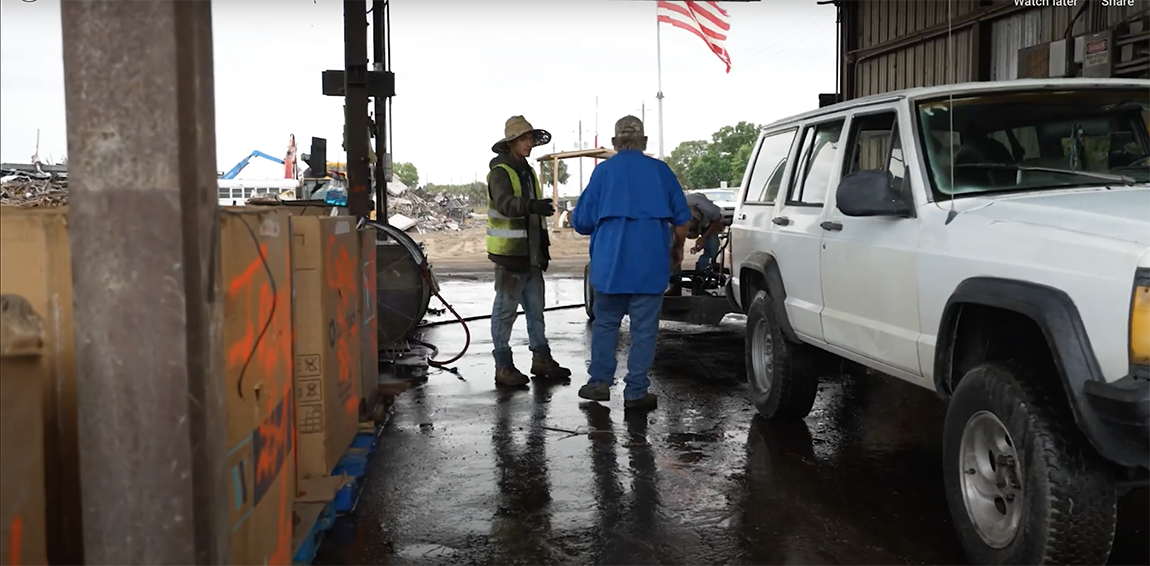


You pull into a scrap yard with a truck full of old copper pipe, aluminum, steel, motors, or construction scrap.
The material gets weighed. You get paid.
And then what?
Most people never see the other half of the scrap metal business.
The metal doesn’t simply sit in a giant pile until someone finds another use for it. Scrap yards are the beginning of a much larger recycling supply chain that can involve sorting, grading, cutting, shredding, magnetic separation, processing, melting, refining, and eventually manufacturing entirely new products.
That rusty piece of steel you sold today could eventually become part of another vehicle, building, appliance, or machine.
Copper can have an even more interesting journey. Old plumbing or electrical wire can eventually return to the economy as usable copper for new electrical, construction, or industrial applications.
Here’s what actually happens to scrap metal after you sell it.
Step 1: Your Scrap Gets Weighed
The process starts with weight.
For larger loads, a vehicle may be weighed on a truck scale before and after unloading. The difference determines the weight of the material delivered.
Smaller quantities may be weighed separately depending on the type of metal and the recycler’s operation.
But weight alone doesn’t determine value.
A thousand pounds of steel is very different from a thousand pounds of copper.
That’s where classification comes in.
Step 2: The Metal Gets Identified and Graded
One of the most important jobs at a scrap recycling facility is determining exactly what material has arrived.
Scrap can include:
– Steel
– Cast iron
– Copper
– Brass
– Aluminum
– Stainless steel
– Insulated wire
– Electric motors
– Automotive components
– Mixed metal assemblies
And those broad categories can be broken down even further.
Copper is a good example.
Clean copper wire may qualify for a very different grade than copper tubing containing solder or other contamination. Insulated wire is classified differently because some of its weight isn’t copper at all.
Aluminum has numerous classifications as well.
The goal is to determine what the material actually is and how efficiently its metal content can eventually be recovered.
Step 3: Different Metals Are Separated
Imagine trying to manufacture new copper wire from a pile containing copper pipe, steel brackets, aluminum siding, plastic, and brass fittings.
It wouldn’t work very well.
Recycling depends heavily on separation.
That’s why sorting begins long before metal reaches a furnace.
Ferrous materials such as steel and iron are separated from non-ferrous metals such as copper, brass, and aluminum.
Individual grades may then be separated further.
This is also why sellers can benefit from sorting material before arriving.
If you already have clean copper, brass, aluminum, motors, and steel separated, don’t throw everything into one pile immediately before selling it.
Step 4: Large Scrap Gets Made Smaller
Metal objects are often inconveniently shaped.
Cars are large.
Structural beams are long.
Appliances are bulky.
Industrial machinery can weigh thousands of pounds.
Before this material can move efficiently through the recycling supply chain, it often needs to become smaller and denser.
Depending on the material and processing facility, equipment can include:
– Hydraulic shears
– Balers
– Crushers
– Shredders
– Torches and other cutting equipment
A large piece of obsolete equipment might eventually become manageable sections of metal.
Sheet metal can be compressed.
Vehicles can be crushed or shredded.
Reducing the size of scrap makes transportation, separation, and downstream processing considerably more efficient.
Step 5: Magnets Pull Out Ferrous Metal
This is where scrap processing starts looking surprisingly sophisticated.
Steel and iron are magnetic.
Copper, brass, and aluminum are not.
Large industrial magnets can therefore separate ferrous metal from other material extremely quickly.
Imagine a shredded vehicle.
Instead of workers manually picking thousands of tiny pieces of steel from a moving stream, powerful magnetic systems can extract ferrous material automatically.
That steel can then continue down its own recycling path.
But what happens to everything the magnet doesn’t pick up?
That’s where things get even more interesting.
Step 6: Non-Ferrous Metals Are Separated
The remaining stream may contain aluminum, copper, brass, stainless steel, plastic, rubber, and other materials.
Processors can use additional technologies to separate them.
One particularly interesting tool is an eddy current separator.
Rather than simply attracting metal like an ordinary magnet, an eddy current system can help eject certain conductive non-ferrous metals from a moving material stream.
More advanced processing operations can also use sensors and other sorting technologies to distinguish materials based on their physical or chemical characteristics.
This is one reason modern metal recycling can recover useful material from incredibly complicated products.
A car isn’t one material.
Neither is an air conditioner.
Neither is an electric motor.
Efficient recycling means separating those products back into useful commodity streams.
Step 7: The Scrap Yard Usually Isn’t the Final Destination
This is an important distinction.
A local scrap recycling facility is part of a much larger industrial network.
Once enough material of a particular grade has been accumulated and prepared, it can be shipped onward to larger processors, mills, foundries, smelters, refiners, or other consumers.
Think of a scrap yard as an important collection and preparation point.
Thousands of small material streams can be combined into commercially meaningful quantities.
One homeowner might bring in 40 pounds of metal.
A contractor might generate several thousand pounds.
A manufacturing operation might produce metal every week.
The recycling system combines those streams until there is enough standardized material to move efficiently through industrial markets.
Step 8: Steel Heads Back Toward the Mill
Recycled steel is an important raw material for steel production.
Prepared ferrous scrap can be shipped to steelmaking facilities, where it can be melted and used in the production of new steel.
Once melted, impurities can be managed and the composition adjusted to produce material meeting the desired specifications.
The resulting steel can eventually become new products such as:
– Construction materials
– Automotive components
– Appliances
– Machinery
– Tools
– Infrastructure
That old water heater doesn’t necessarily disappear when you recycle it.
Its metal can re-enter the manufacturing economy.
Step 9: Aluminum Gets Another Life
Aluminum is particularly well suited to recycling.
Scrap aluminum can be sorted by type, processed, melted, and cast into material suitable for manufacturing new products.
The exact path depends on the alloy and scrap grade.
Aluminum from an old window frame isn’t necessarily identical to aluminum from an automotive wheel, which is one reason proper classification matters.
Eventually, recycled aluminum can find its way into products ranging from vehicles and building materials to equipment and packaging.
Step 10: Copper Gets Processed and Refined
Copper is one of the most valuable common metals entering the scrap stream.
It is also highly recyclable.
Copper scrap can come from:
– Electrical wire
– Plumbing
– HVAC equipment
– Motors
– Transformers
– Generators
– Automotive components
– Industrial machinery
Higher-quality copper scrap may require less intensive processing than heavily contaminated or mixed copper-bearing material.
Depending on its grade and destination, scrap copper can undergo mechanical processing, melting, refining, and other steps before becoming usable raw material again.
Eventually, recycled copper can return to applications such as electrical equipment, wire, plumbing products, industrial machinery, and construction materials.
The copper itself hasn’t stopped being useful simply because the building, appliance, or machine surrounding it reached the end of its life.
What Happens to Electric Motors?
Electric motors are a great example of why scrap processing involves more than simply melting everything together.
A motor can contain:
– Steel
– Copper windings
– Aluminum
– Other components and materials
That means an old motor represents several material streams packed into one object.
Processors can break motors down so the copper-bearing material can be recovered separately from the ferrous portion.
This is why electric motors can have their own scrap classification rather than simply being treated as ordinary steel.
What Happens to an Old Air Conditioner?
Air conditioning equipment is another excellent example.
A properly decommissioned AC system can contain:
– Steel housing
– Copper tubing
– Copper-aluminum coils
– Electric motors
– Wiring
– Compressor
– Aluminum components
Those materials don’t all belong in the same recycling stream.
Separating them allows the copper, aluminum, steel, and other recoverable materials to move toward the processors best equipped to reuse them.
For HVAC contractors generating old equipment regularly, that separation can also make the scrap stream considerably more valuable.
What Happens to a Scrap Car?
End-of-life vehicles are essentially enormous mixed-material recycling projects.
Before and during processing, reusable components and regulated materials may be removed or handled appropriately.
The remaining vehicle can eventually be crushed or shredded.
From there, processors work to separate the resulting material streams.
Ferrous metal represents a major portion of the recyclable material, but vehicles also contain aluminum, copper, electric motors, wiring, and other recoverable metals.
Modern vehicles are becoming even more complicated as manufacturers use larger quantities of electronics, aluminum, and electrical components.
Does Recycled Metal Become Lower Quality?
Not necessarily.
This is one of the remarkable things about metal recycling.
Metals aren’t recycled in exactly the same way as many disposable products where the recovered material necessarily becomes something lower quality.
With appropriate sorting and processing, metals can return to demanding industrial applications.
Copper is especially notable because its useful properties can be retained through recycling.
Steel and aluminum likewise move through established recycling systems that return enormous quantities of scrap to manufacturing.
The key is proper separation, processing, and control of the resulting material.
Why Does Sorting Your Scrap Matter So Much?
Now the pricing system at the scrap yard starts making more sense.
A recycler isn’t arbitrarily deciding that one pile is worth more than another.
Different materials have different commodity values, recovery rates, processing requirements, contamination levels, and downstream markets.
Clean, correctly sorted material is easier to turn into a usable commodity.
Mixed material requires more work.
That is why preparation can affect scrap value.
If you have clean copper pipe, don’t bury it beneath ordinary steel.
If you have brass fittings, keep them separate.
If your business generates electric motors consistently, don’t automatically treat them as generic iron.
Understanding what happens after you sell scrap helps explain what happens before you get paid for it.
Where Does Your Scrap Metal Ultimately End Up?
There isn’t one answer.
Scrap metal moves through regional, national, and international commodity markets.
Depending on the material, grade, market conditions, and buyer, it can pass through multiple companies before eventually becoming raw material for manufacturing.
What matters is that the metal remains useful.
A demolished building can help supply material for future construction.
An old vehicle can contribute metal to new manufactured products.
Copper wire removed during a renovation can eventually return to productive use.
An obsolete machine can become raw material instead of occupying space behind a warehouse.
That’s the fundamental economics behind scrap recycling.
Scrap Metal Isn’t the End of the Line
When something becomes “scrap,” it sounds like its useful life is over.
For the metal itself, that’s often not true at all.
The product may be finished.
The car may never drive again.
The air conditioner may never cool another building.
The motor may never turn again.
But the steel, copper, brass, aluminum, and other metals inside those products still have value.
A scrap yard is where those materials begin their journey back into the economy.
Recycle Scrap Metal With Atland Recycling
Atland Recycling works with homeowners, contractors, automotive businesses, HVAC companies, agricultural operations, manufacturers, and industrial customers to recover valuable scrap metal.
Based in Okeechobee, Florida, we serve customers and businesses throughout South Florida, including Palm Beach and Miami.
Whether you’re recycling copper, aluminum, brass, steel, electric motors, automotive scrap, machinery, or larger commercial quantities of metal, Atland Recycling can help identify, sort, and process your material efficiently.
Contact Atland Recycling to discuss your scrap metal, current pricing, or commercial recycling needs.